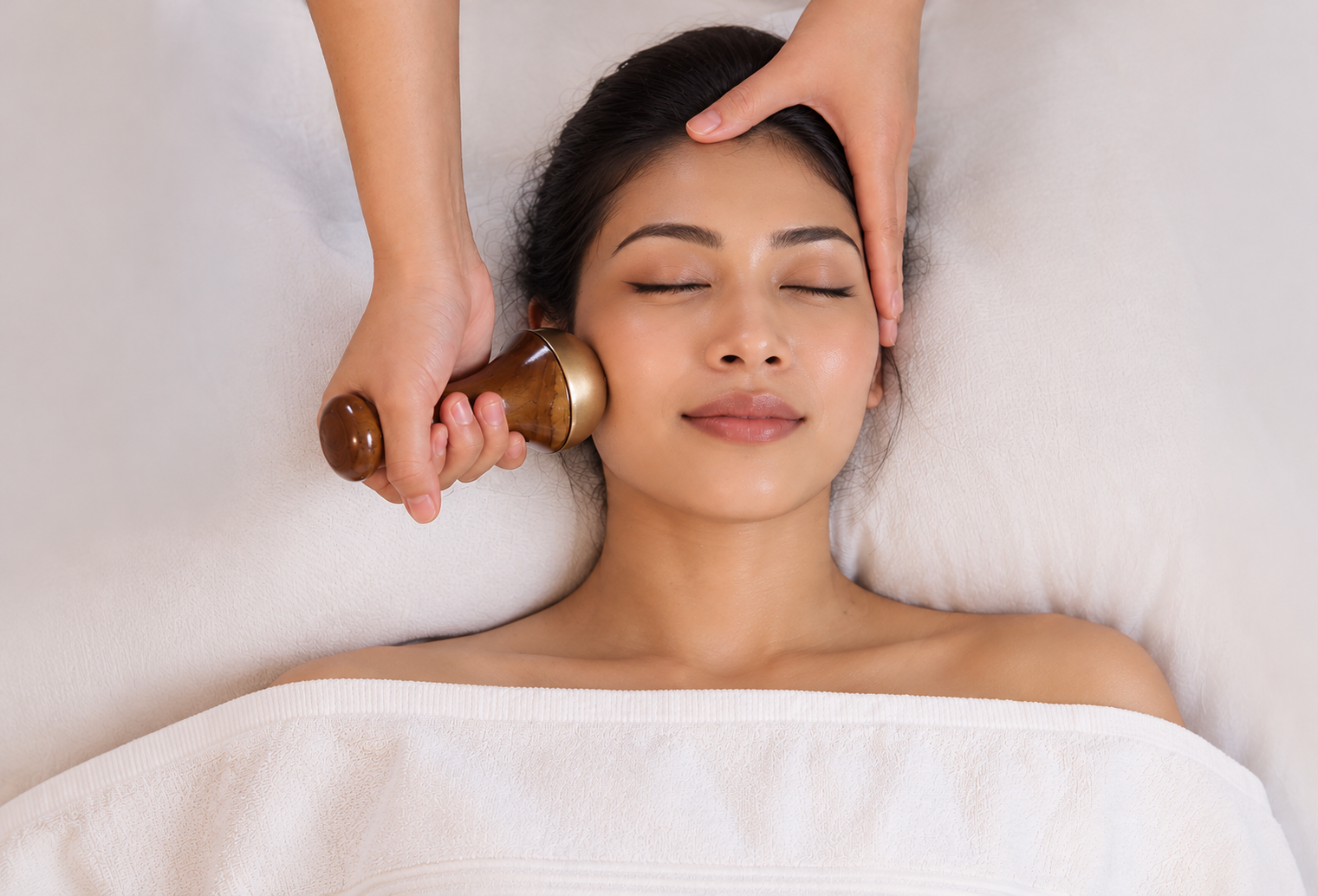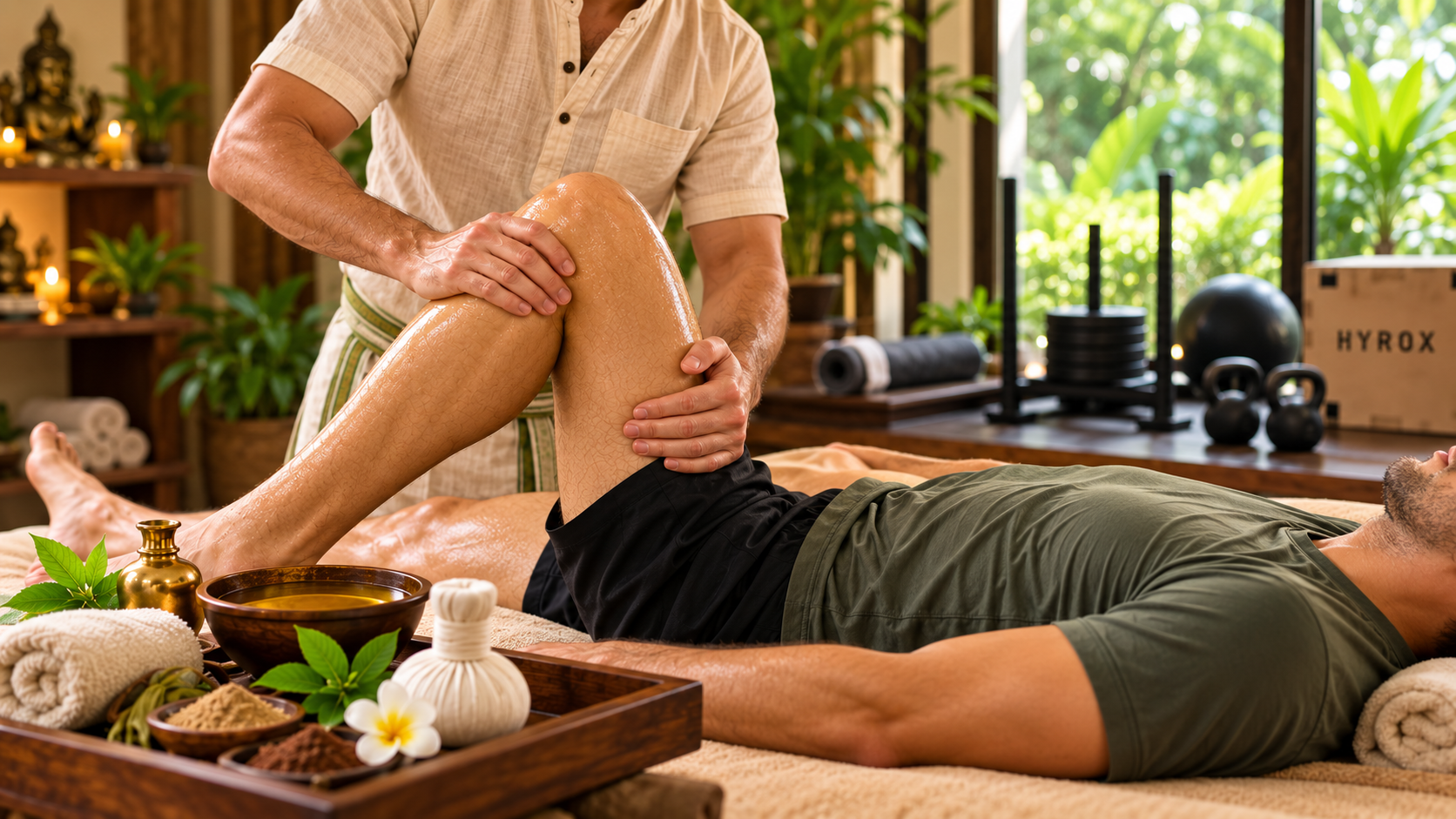
In Ayurveda, the feet are regarded as an important part of the body, closely connected to overall health and well-being. Traditional Ayurvedic practices recognize specific vital points in the body, known as Marma points, which are believed to be associated with the flow of life energy. Gentle stimulation of these points is traditionally thought to support balance, relaxation, and harmony between the body and mind.
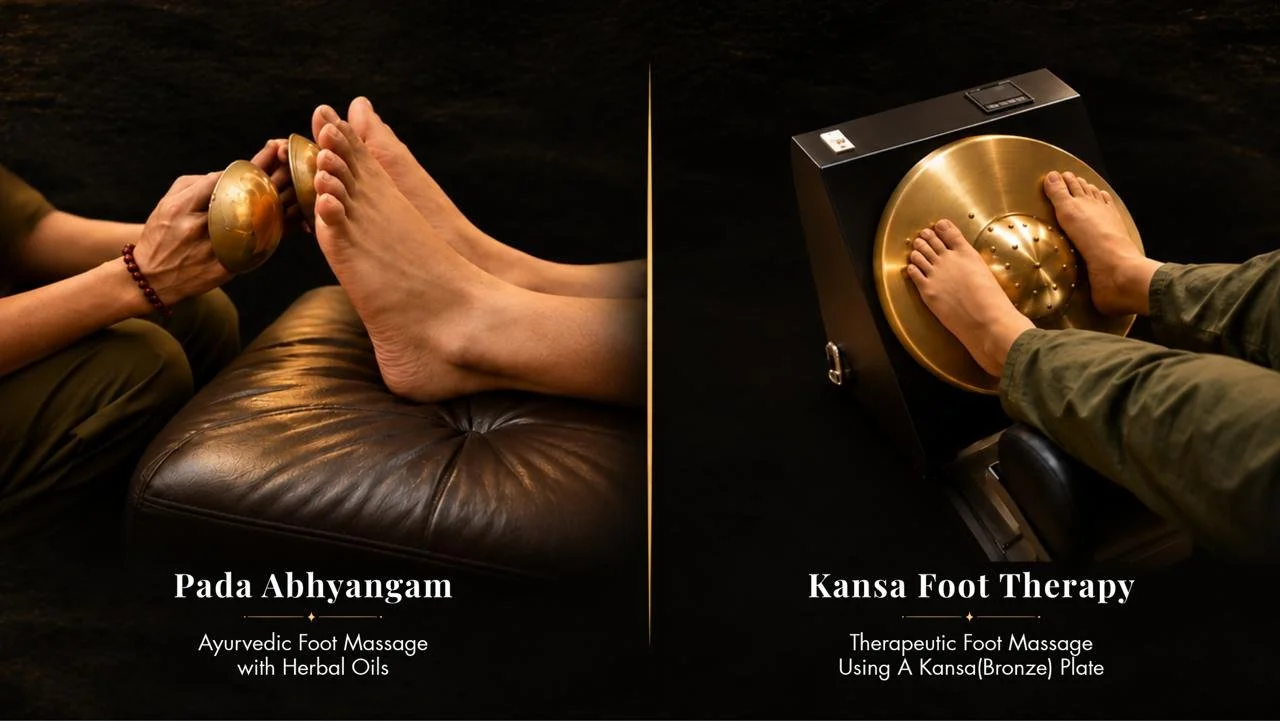
What Is Pada Abhyangam?
The Sanskrit word Padabhyanga is derived from two words:
Pada — meaning foot.
Abhyanga — meaning the application of oil through massage to nourish and care for the body.
Padabhyanga is a traditional Ayurvedic foot massage that combines the application of warm oil with gentle, rhythmic massage techniques. It is valued as a holistic wellness practice that encourages relaxation and supports a sense of physical and mental well-being. In Ayurveda, Padabhyanga is also associated with grounding and calming the body and mind,making it a particularly soothing addition to a daily self-care routine.
How is Pada Abhyangam Performed?
Padabhyanga is a simple yet deeply relaxing ritual that can be performed using warm medicated oil or ghee.
Step 1: Warming the oilThe medicated oil or ghee is gently warmed using the double-boiler method. A small bowl containing the oil is placed in a vessel of hot water until it reaches a comfortably warm temperature.
Step 2: Applying the oil
The warm oil or ghee is generously applied to the feet, including the soles, heels, toes, ankles, and lower legs.
Step 3: Massaging the feet
Massage the feet with your hands using gentle, rhythmic strokes and moderate pressure. Special attention may be given to the soles, heels, ankle joints, and the area where the Achilles tendon connects the calf muscles to the heel. Always adjust pressure to individual comfort and sensitivity. Gentle stroking and circular movements can help relax tired feet and provide a comforting sensory experience.
Step 4: Soaking the feet
Depending on the traditional practice being followed, the massage may be followed by soaking the feet in comfortably warm water or a suitable herbal decoction. The water temperature should be safe and comfortable for the individual.
When Is the Best Time for Padabhyanga?
Although foot massage can be performed at different times of the day, evening or bedtime is traditionally considered an ideal time for Padabhyanga. After a long day of standing, walking, or other physical activities, a gentle foot massage can become a calming ritual that helps the body unwind before sleep. Padabhyanga may also be incorporated into a full-body Abhyanga, the traditional Ayurvedic practice of oil massage. A short session of approximately 10–15 minutes can be a convenient way to include foot care in your daily wellness routine.
Who May Benefit from Padabhyanga?
Padabhyanga may be a comforting self-care practice for people who experience:
• Tired or overworked feet after prolonged standing or walking.
• Dry, rough skin on the feet.
• Mild muscular tension or a feeling of heaviness in the feet.
• Difficulty relaxing at the end of a busy day.
• A desire to establish a calming bedtime routine.
Padabhyanga is best viewed as a complementary wellness practice rather than a substitute for medical care.
Who Should Avoid Padabhyanga?
Although foot massage is generally well tolerated by many people, it may not be suitable in certain
circumstances. Avoid massage or seek medical advice before proceeding if you have:
• Fever or an acute illness.
• Suspected or diagnosed deep vein thrombosis (DVT).
• An active skin infection, open wound, or inflamed skin condition.
• Significant swelling, unexplained pain, or a suspected circulatory problem in the lower limbs.
• Reduced sensation in the feet, including that associated with certain neurological conditions or diabetes.
If you have a known vascular condition or another significant medical concern, consult a qualified healthcare professional before receiving a foot massage. Massage should never be applied forcefully to a painful, swollen, or injured area.
The Importance of Padabhyanga
Within traditional Ayurvedic practice, Padabhyanga is valued for its nourishing and relaxing qualities. Its commonly described benefits include:
1. Nourishes the skin
The application of oil helps moisturize dry skin and soften rough areas of the feet.
2. Eases everyday foot fatigue
Gentle massage can help relieve the feeling of tiredness and tension after a long day on your feet.
3. Promotes relaxation
The slow, rhythmic movements of massage can help calm the body and create a sense of comfort and well-being.
4. Supports a restful bedtime routine
An evening foot massage can serve as a relaxing ritual that may help some people unwind before sleep.
5. Improves the feeling of mobility and comfort
Gentle massage may temporarily ease mild muscular tension and stiffness, helping the feet feel more comfortable.
6. Supports regular foot care
Consistent moisturizing and gentle massage can help maintain soft, supple skin and reduce dryness that contributes to rough heels. Deep heel cracks may require additional treatment. In Ayurveda, additional benefits such as supporting vision, balancing bodily energies, and reducing anxiety are described in traditional texts.
Kansa Bowl Foot Massage: An Ancient Ayurvedic Ritual
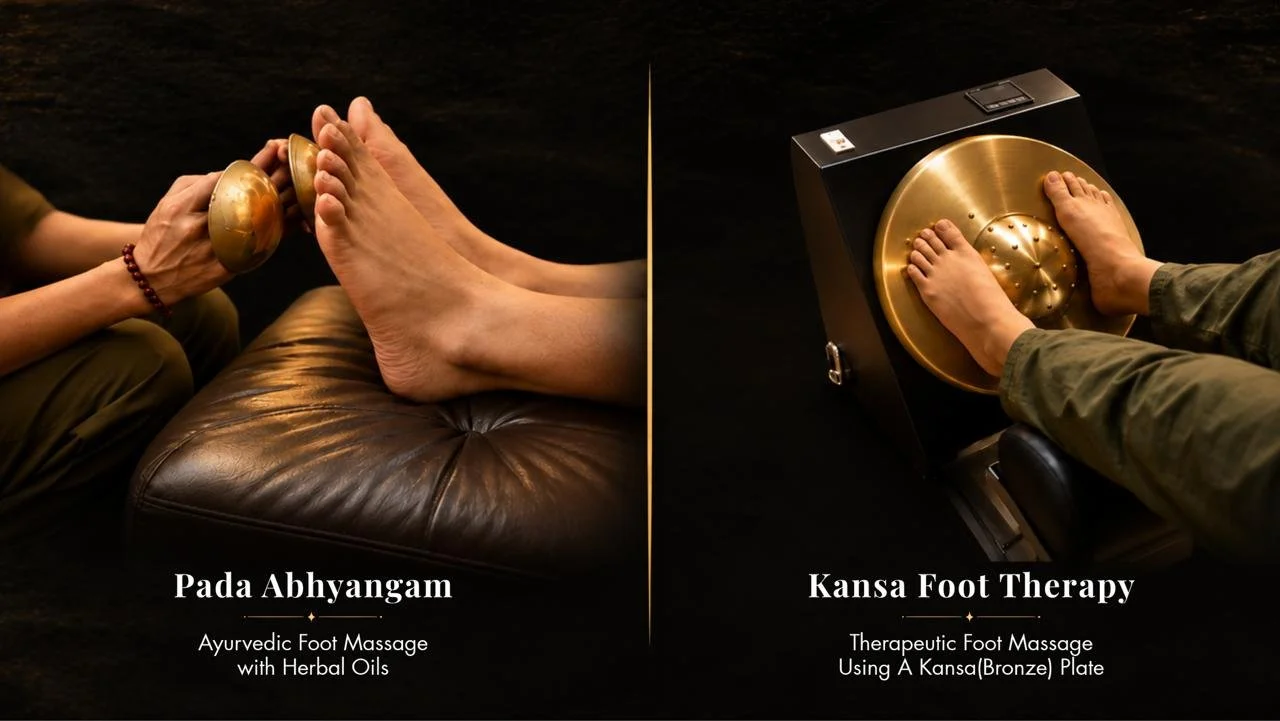
Another form of Padabhyangam is traditional Kansa Bowl Foot Massage, which uses a specially crafted metal bowl to massage the soles of the feet.
The word Kansa refers to a traditional bronze.
In Ayurvedic tradition, Kansa foot massage is associated with balancing the three doshas: Vata, Pitta, and Kapha.
How Is Kansa Bowl Foot Massage Performed?
A suitable oil or ghee is applied to the feet. The therapist then uses the smooth surface of the Kansa bowl to massage the soles in gentle, circular movements. The pressure and pace are adjusted to suit the individual’s comfort. The bowl glides over the oiled skin, creating a distinctive massage experience that differs from a conventional hand massage.
The choice of oil is traditionally guided by the individual's Ayurvedic constitution, perceived doshic imbalance, and the purpose of the treatment.
Benefits of Kansa Bowl Foot Massage
Traditionally, Kansa foot massage is believed to support doshic balance, promote relaxation, and help maintain harmony within the body. Besides this it helps:
• Moisturize the skin when performed with suitable oil.
• Provides a soothing massage experience for tired feet.
• Encourages relaxation and mindful self-care.
• May temporarily ease mild muscular tension and improve the feeling of comfort.
Traditional descriptions sometimes suggest that Kansa massage draws toxins from the body or regulates body temperature.
Padabhyanga or Kansa Bowl Massage: Which Should You Choose?
Both practices offer a traditional approach to foot care, but they differ in their techniques. Padabhyanga primarily uses the hands to apply warm medicated oil or ghee through gentle massage.
Kansa Bowl Foot Massage uses a smooth metal bowl to create circular, gliding movements over the oiled soles.
The choice depends on personal preference, comfort, and the experience you wish to enjoy. Both can be incorporated into a relaxing foot-care ritual, provided they are performed safely and with appropriate pressure.
Make Foot Care a Daily Ritual
Our feet support us throughout the day, carrying the weight of our bodies and helping us move through the world. Giving them regular attention is a simple yet meaningful way to care for ourselves. Whether you choose the traditional hand movements of Padabhyanga or the distinctive technique of Kansa Bowl Foot Massage, a few mindful minutes of foot care can become an opportunity to slow down, nourish the skin, and relax after a demanding day.
Disclaimer: This article is intended for educational and general wellness purposes. Ayurvedic practices should not replace professional medical diagnosis or treatment. Individual results may vary.
Why Choose Suvarnaveda Wellness in Bangkok?
At Suvarnaveda Wellness, we bring together the inspiration of traditional Ayurveda and the restorative value of mindful self-care.
Conveniently located on Sukhumvit Road in Khlong Toei, Bangkok, near Doi Soi 12 Cafe, Suvarnaveda Wellness welcomes those seeking an Ayurvedic-inspired approach to personal wellness.
Whether you live in Bangkok or are visiting the city, the pada abhyangam and kansa bowl massage is a lovely addition to a wellness-focused day.
Contact us to enquire about availability and bookings:
099 283 5542
+66 92 323 5664
Make time for yourself and discover the calming experience of a massage at Suvarnaveda Wellness.
FAQs
What is the difference between Pada Abhyangam and Kansa Foot Massage?
Pada Abhyangam involves applying warm oil to the feet and performing a manual massage using a handheld bronze Kansa tool. Kansa Foot Massage begins with a hand-based oil massage, followed by a specialised machine-operated bronze Kansa plate.
What is used in Pada Abhyangam?
Pada Abhyangam uses warm medicated oil or suitable massage oil along with a handheld bronze Kansa tool to massage the feet through gentle, controlled movements.
Is Kansa Foot Massage the same as Pada Abhyangam?
No. Although both treatments involve oil and traditional Kansa techniques, they differ in how the Kansa tool is used. Pada Abhyangam uses a handheld bronze tool for manual massage, whereas Kansa Foot Massage uses a machine-operated bronze plate following a hand oil massage.
What is a Kansa Foot Massage machine?
A Kansa Foot Massage machine is a specialised device fitted with a bronze massage plate. During the treatment, the therapist first performs a manual oil massage and then uses the machine-operated Kansa plate as the next stage of the treatment.
Which is better: Pada Abhyangam or Kansa Foot Massage?
Neither is universally better. Pada Abhyangam is suitable for those who prefer a handheld bronze-tool massage, while Kansa Foot Massage offers a combination of hand massage and machine-operated bronze plate treatment. The choice depends on personal preference and individual suitability.
Where can I get a Kansa Foot Massage or Pada Abhyangam in Bangkok?
You can experience them at Suvarnaveda Wellness, located at 5 Soi 12, Sukhumvit Road, Khlong Toei, Bangkok 10110, Thailand, near Doi Soi 12 Cafe.
How do I book an appointment at Suvarnaveda Wellness?
For booking enquiries and availability, contact Suvarnaveda Wellness at 099 283 5542 or +66 92 323 5664.